
What Is Rainfall Runoff?
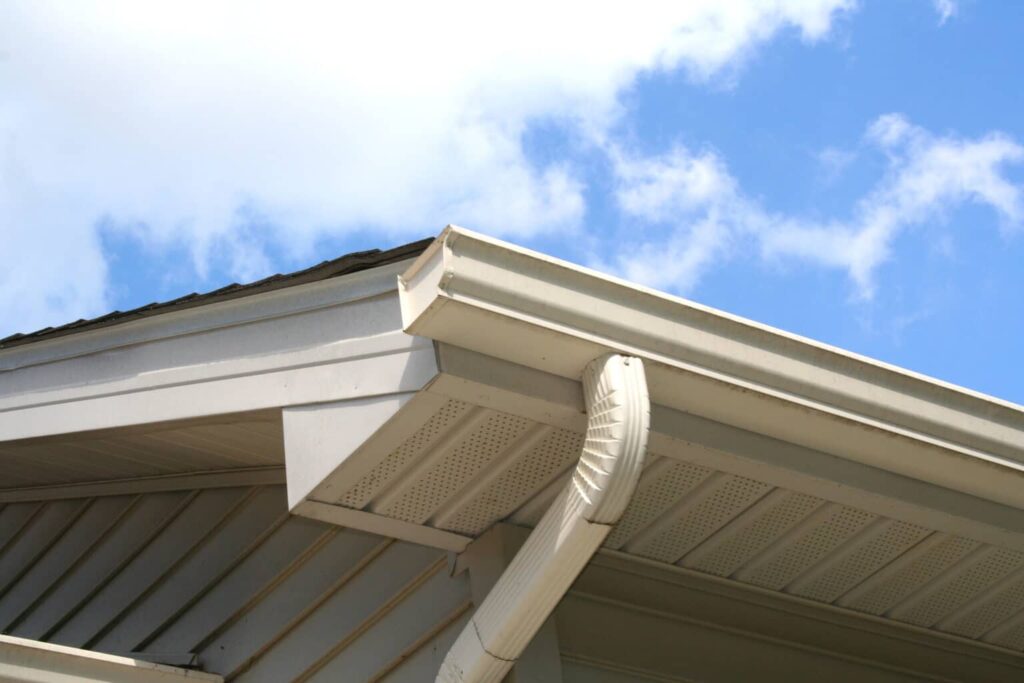
Rainfall runoff is the portion of rain that flows off a surface rather than soaking into the ground. When rain hits your roof, driveway, or patio, most of it runs off as surface water. How much depends on the material: a metal roof sheds around 95% of rainfall while a garden bed absorbs 80% or more.
Understanding your runoff volume matters for two reasons. First, it tells you how much water you could potentially harvest and reuse. Second, it helps you anticipate drainage load during heavy rain events, which is useful for sizing gutters, downspouts, and drainage systems.
The Runoff Coefficient Explained
Every surface has a runoff coefficient: a number between 0 and 1 that represents the fraction of rainfall that becomes surface runoff. A coefficient of 0.95 means 95% runs off. A coefficient of 0.20 means only 20% runs off and the rest infiltrates or evaporates.

Here is a quick reference for common surfaces:
Metal roof (0.95): Almost all rainfall becomes runoff. The smoothest and most efficient surface for rainwater harvesting.
Asphalt shingles (0.85): High runoff rate. A standard composition shingle roof is an effective catchment surface.
Concrete and paving (0.85): Minimal absorption. Driveways and patios shed most rainfall directly into drainage.
Flat gravel roof (0.55): The gravel layer absorbs and retains some water, reducing runoff compared to a smooth surface.
Gravel and loose stone (0.70): Significant absorption through the void spaces between stones.
Lawn and turf (0.35): Grass and its root system absorb a meaningful portion of rainfall. A healthy lawn with good soil structure handles more than a compacted one.
Woodland and forest (0.20): The combination of canopy interception, leaf litter, and deep root networks makes forested surfaces among the most absorbent of all.
Green and living roofs (0.10): Specifically designed to absorb and retain rainfall. The growing medium and plant roots hold water that would otherwise run off immediately.
How to Calculate Rainfall Runoff
The formula is straightforward:
Runoff volume = catchment area x rainfall depth x runoff coefficient
For example, a 1,500 sq ft metal roof receiving 1 inch of rain produces roughly 890 gallons of runoff. The same area of lawn under the same rainfall produces only 325 gallons.
To convert to gallons: multiply area in square feet by rainfall in feet (divide inches by 12) by 7.48 gallons per cubic foot, then multiply by your runoff coefficient.
Our calculator handles all of this automatically and also subtracts a 15% allowance for first-flush diversion and filter losses, giving you a realistic harvestable volume rather than a theoretical maximum.
Rainwater Harvesting Basics
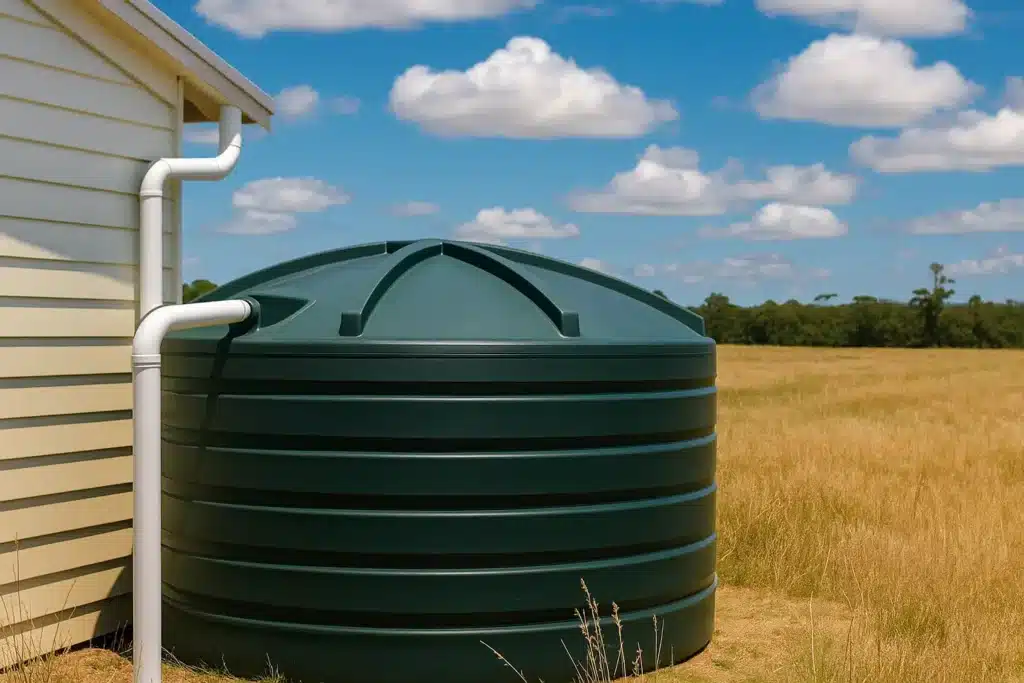
Rainwater harvesting is the practice of collecting and storing runoff for later use. At the household level this typically means collecting roof runoff via gutters into a storage tank for garden irrigation, toilet flushing, or laundry use.
First-flush diversion is an important step that many systems skip. The first few millimetres of rainfall wash dust, bird droppings, and debris off your roof. A first-flush diverter automatically discards this initial flow and sends the cleaner water that follows into your tank. Our calculator applies a 15% reduction to account for this and for minor filter losses.
Tank sizing is the most common question for anyone setting up a harvesting system. The right tank size depends on how much runoff your roof generates per rain event and how frequently it rains in your area. Our tank sizing guide recommends based on your single-event harvest volume, but for a full-season system you should also factor in your local average annual rainfall and your intended usage volume.
Roof material matters for water quality. Metal roofs are generally the cleanest catchment surfaces. Asphalt shingles can leach trace compounds in the first few years after installation. Green roofs produce runoff with elevated organic content. If you plan to use harvested water for anything beyond irrigation, have it tested before use.
Sizing Your Rainwater Storage Tank
A tank that is too small fills up quickly and wastes overflow during heavy rain events. A tank that is too large sits mostly empty and represents unnecessary cost and space.
As a general guide, size your tank to capture the runoff from your two or three largest rain events of the year. For most properties in the US, that means a tank capable of holding between one and three times your average single-event harvest volume.
50 to 100 gallons: Suitable for small garden watering between rain events. A simple barrel under a single downspout.
250 to 500 gallons: Covers a moderate garden through dry spells. Needs a simple overflow system.
1,000 gallons: A serious harvesting setup. Can carry a property through several weeks without rain for irrigation purposes.
2,500 gallons and above: Year-round household supply for non-potable uses. Requires proper filtration, overflow management, and ideally a pump system.
Monitor Rainfall at Your Property
The most accurate input for any runoff calculation is your own local rainfall data, not a regional weather station that may be miles away. Microclimates, terrain, and building configurations mean your property can receive meaningfully different rainfall totals from the nearest official gauge.
A home weather station with a rain gauge gives you precise rainfall measurements at your exact location. Feed those readings into our calculator and you have a live picture of how much water is hitting your roof and how much you could be capturing.
See our guide to the best home weather stations for recommendations across all budgets. The Ambient Weather WS-2902C includes a self-emptying tipping bucket rain gauge and logs rainfall data you can access from anywhere via the Ambient Weather Network.

Reviewed by Ed Oswald
Lead Reviewer, Weather Station Advisor
Ed has covered consumer technology and weather instruments for Digital Trends, PC World, and the New York Times for over 20 years. He has personally tested every station recommended on this page.