
Wind Speed Units Explained
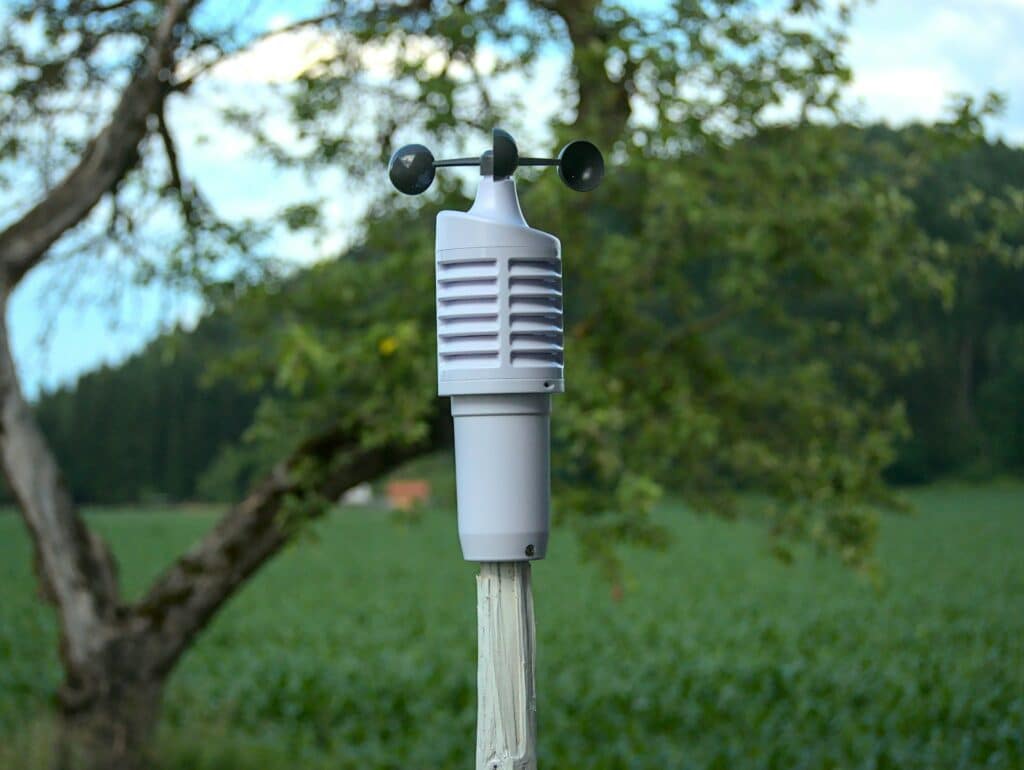
Wind speed is measured in different units depending on where you are and what you’re doing. Meteorologists in the United States use miles per hour. Aviation uses knots. Scientific and international weather reporting uses metres per second or kilometres per hour. Sailors and mariners rely on the Beaufort scale. If you own a home weather station, understanding how these units relate to each other helps you interpret your readings correctly and compare them against forecasts from different sources.
Miles per hour (mph) is the standard for consumer weather stations and forecasts in the United States. Most home weather stations sold in the US display wind speed in mph by default.
Kilometres per hour (km/h) is the standard in most of the rest of the world. If you’re comparing your station’s readings against an international weather service, this is the unit you’ll encounter most often.
Metres per second (m/s) is used in scientific contexts and is the SI base unit for wind speed. It gives a more precise sense of the physical energy involved in a given wind.
Knots are nautical miles per hour, used almost universally in aviation and marine forecasting. One knot equals approximately 1.15 mph. If you’re checking a marine forecast before heading out on the water, your readings will be in knots.
Feet per second (ft/s) is less commonly used for weather but appears in engineering and physics contexts. It’s useful for understanding the physical force of wind on structures.
The Beaufort scale is a descriptive scale from 0 to 12 that translates wind speed into observable effects, from flat calm to hurricane-force winds. It was developed by Admiral Francis Beaufort in 1805 and remains widely used in marine and general weather forecasting today.
The Beaufort Wind Scale Explained

The Beaufort scale gives you a practical sense of what any wind speed actually feels and looks like. Rather than memorising conversion factors, you can step outside and observe the environment to estimate wind speed directly.
A Beaufort 0 means complete calm: smoke rises vertically and the air is still. By Beaufort 3, leaves are rustling and light flags are extended. At Beaufort 6, large branches are moving and umbrellas are difficult to use. Beaufort 8 is a full gale where twigs break off trees and walking becomes very difficult. Beaufort 12 is hurricane force.
For home weather station owners, the Beaufort scale provides a useful sanity check. If your anemometer is reading Beaufort 7 (near gale) but the trees outside are barely moving, something may be wrong with your sensor placement or calibration. Our home weather station accuracy guide covers the most common causes of inaccurate wind readings.
Wind Speed and Wind Chill
Wind speed has a direct effect on how cold the air feels on exposed skin. The faster the wind, the more rapidly it replaces the thin layer of warm air that insulates your skin, carrying heat away and making the effective temperature feel much lower than the thermometer shows.
This effect commonly called wind chill only applies to living things and is most significant below 50°F (10°C). At 32°F with a 20 mph wind, the wind chill equivalent is around 19°F. At the same temperature with a 40 mph wind, it drops to around 9°F.
Use our wind chill calculator to find the exact wind chill for any combination of temperature and wind speed, including frostbite risk and safe exposure time estimates.
Wind Speed and Your Weather Station Anemometer
The accuracy of your wind speed readings depends heavily on where and how your anemometer is mounted. The National Weather Service measures wind at 33 feet above ground over open, flat terrain. Most home installations fall well short of this standard, which means your readings will typically be lower than the official wind speed for your area.
This is normal and expected. The goal for home weather station placement is consistency rather than absolute accuracy: if your anemometer is well-sited, your readings will correlate reliably with actual wind speed even if the absolute values are lower.
Common causes of low wind speed readings include mounting below roofline level, nearby trees or buildings creating wind shadows, and obstructions within 50 feet of the sensor. Our weather station placement guide covers anemometer siting in detail.
For the most accurate wind speed measurement available to home users, the Davis Vantage Pro2 and Ambient Weather WS-5000 both use ultrasonic anemometers that measure wind without moving parts, eliminating the friction and starting threshold issues that affect cup anemometers at low wind speeds.
Converting Wind Speed for Different Uses

For sailing and boating: Convert to knots. Most marine charts, forecasts, and navigation apps use knots as the standard. A wind of 20 mph is approximately 17.4 knots, which falls in Beaufort 5 territory: fresh breeze conditions with moderate waves and frequent whitecaps.
For running and cycling: mph or km/h are most practical. Wind resistance increases with the square of speed, so a 20 mph headwind feels dramatically harder than a 10 mph headwind, not just twice as hard.
For aviation: Always use knots. Even if your home weather station reports in mph, pilots and controllers work exclusively in knots. The conversion is simple: divide mph by 1.15 to get knots.
For scientific or international comparison: Use m/s or km/h. Most global weather datasets and climate records use these units, so converting your local readings makes comparison straightforward.

Reviewed by Ed Oswald
Lead Reviewer, Weather Station Advisor
Ed has covered consumer technology and weather instruments for Digital Trends, PC World, and the New York Times for over 20 years. He has personally tested every station recommended on this page.